

The Animals Never Forgot
A reflection on land, roots, and the grief of coming home

She arrived in Bolivia with a fever.
On a bus, exhausted and disoriented, Katja Wostradowski looked out the window at the mamitas in their bright, traditional clothing with their long braids and unhurried presence and something in her said: I have arrived.
She didn’t fully understand the calling that had brought her to South America. She only knew she’d been hearing it since she was eighteen. Every person in her life had tried to talk her out of it. And yet, she had come anyway.
Sitting with Katja in this conversation, something in me recognized her. She grew up in East Germany, left for London, followed a thread to Bolivia and then to Peru, built a life in the Sacred Valley that most of us can barely imagine. Her path is singular and extraordinary.
I grew up mostly in West Michigan. I left for Germany when I was 22 (the Wall had just fallen) and stayed til I was 25, bringing home a fiancé and a dog. I later followed my heart to Alaska with a different husband and different dogs.
Both of us followed some kind of beacon to find where we felt most alive and both of us landed somewhere steeped in indigenous culture and ancient relationship to land. Peru called to her. Alaska called to me. We are both transplants who found, in those places, something we hadn’t known we were looking for.
I say this because somewhere in the middle of our conversation, that fact settled into me in a new way. Because what Katja was describing - the ancestral reckoning, the slow and painful work of looking honestly at what she carried as a German woman, as a Westerner - was not someone else’s story I was witnessing from the outside. It was a mirror. It was mine, too.
I am fluent in German. I have spoken it for all of my adult life. I learned it, originally, as a way of staying in relationship with my grandparents, who are now gone. It is an act of remembering, of refusing to let the thread go completely.
And my last name, Hirt, means Shepherd in German.
I have known this since my first German class in 9th grade. I’ve always loved it, felt the poetry of it, noted the obvious resonance with my work alongside animals. The thing is, in talking with Katja, something opened up. Because a shepherd is not just someone who loves animals. A shepherd is someone who knows the land and moves with the seasons. Someone who tends what has been entrusted to their care and who understands, in their bones, that they are in relationship - not in dominion.
My ancestors knew that. Somewhere, back far enough, they knew it.
And then it was taken from them. And from me.
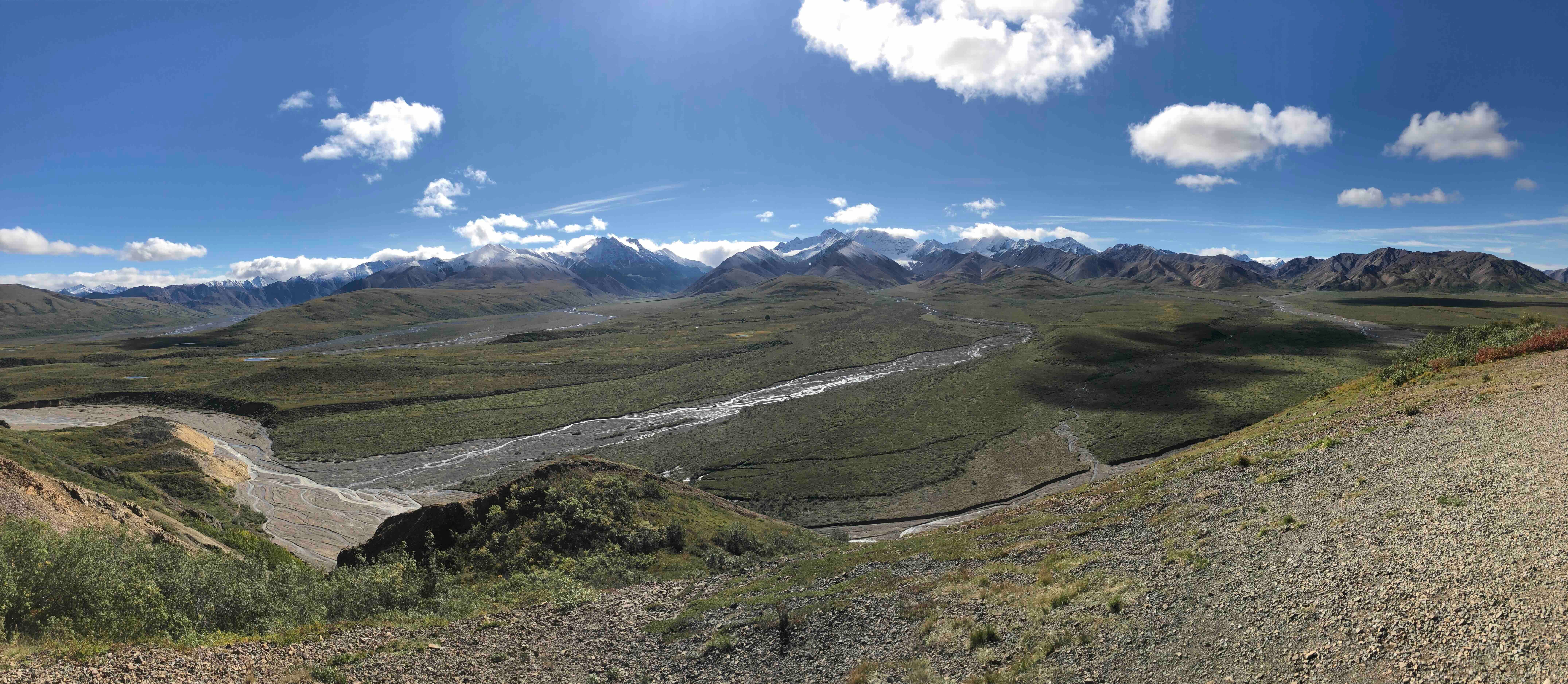
I first felt it return in the summer of 2013, deep inside Denali National Park, at a place called Polychrome. My husband and I were there with two dear friends, just the four of us, no other human soul for miles. Around us: bear, moose, caribou, wolves, wolverines, golden eagles, and fireweed blazing across the hillsides. The silence was so vast and so alive it had no interest in my human concerns. And standing in the middle of all of it, I started to cry. I turned to my husband and said: I need more of this. Within two weeks, he had a job offer in Anchorage. Six months later, we moved. We stayed for seven years. It was there, in that ancient, unhurried landscape, that my animal communication journey began, because Alaska opened me back up to what it meant to be truly connected. To Mother Earth and all of her animals. And to all that is.
Much like how Katja felt it when she arrived in Peru. She talked about what she witnessed in the Andes: a culture that, despite everything colonization tried to do to it, still held its roots. Still held its relationship to land, to seasons, to the sacred in the everyday. And how encountering that felt like a reawakening of something she had forgotten she even carried.
Since our conversation, I’ve been asking my Guides: What did we lose?
And by “we,” I mean those of us with white European ancestry now living in the Americas - those of us whose 7x-great-grandmothers once knew the name of every plant in the hedgerow. Our ancestors who lit fires at the solstice and read the sky, the soil, and the behavior of animals the way we now read our phones. The ones who understood that every living thing was in relationship with every other living thing and that humans were not the center of that web, but a thread within it.
We were indigenous once, too. Not to the land we now stand on - but somewhere, to some land, we belonged. We were rooted. We knew the ceremonies and how to ask permission before we took. We understood reciprocity not as a concept, but as a way of breathing.
We had our own mystics. Hildegard of Bingen, a 12th century German abbess, healer, and visionary, spoke of the living light of the Divine moving through all of creation. She knew the plants, the animals and the unseen. She was one of ours - and most of us have never heard her name.
With the rise of the Christian Church came the steady, violent pressure of a worldview that said the land was not sacred, the animals were not sentient and that the unseen world was not real. We were also taught that women who knew things were dangerous. Generation after generation, the thread was burned. We forgot and kept going, building a civilization on top of the forgetting.
I think a lot of what ails us now, the disconnection, loneliness, and hunger that consumerism or celebrity can never quite fill, is this strange grief that has no name. It stems from this loss in what was taken, in what we were told to be ashamed of.
Katja talked about shame. The shame her ancestors carried. The shame that lives in cultures that have caused harm and also been severed from their own roots. Perhaps this is why our culture has harmed so many. Because of that separation, and the grief it created and never honored, we are wounded. And from that wound, we perpetuate further wounds.
We couldn’t explore this fully in our conversation so I am left with this: What would it look like to grieve what we lost? Not as a way of centering ourselves in someone else’s story or to appropriate another culture’s practices. But as a genuine act of mourning. And then we create spaces for remembering. Ways to return to our own roots, however buried, however scorched to honor of our own ancient ways. We could find ways to carry them forward as part of atoning for what our separation has caused others.
I believe we cannot fully heal what we’ve done to this earth, to each other, to the animals, until we grieve what was done to us. Until we stop performing wellness and start actually coming home.
I am a Hirt - a shepherd. It was always in my name. The animals have been waiting, patiently, for me to remember. They never left the web or forgot the language. And when we get quiet enough, when we stop doing long enough to start feeling, they meet us at the threshold. Not to fix us or bypass the grief, but to shepherd us into it, and through it, and back toward something that feels, finally, like land beneath our feet.
Not yet a paid subscriber? I’d love to have you. Your support makes this little corner of the internet possible and it means we get to keep going deeper, together.
For those of you who are paid subscribers - Thank You!! I’ve shared an additional support piece below.
